



 AI
AI
AI
AI

AI

Enterprise AI data strategy is separating the organizations that put AI into production from those that aspire to it. The difference boils down to whether the data foundation was built before AI was deployed.
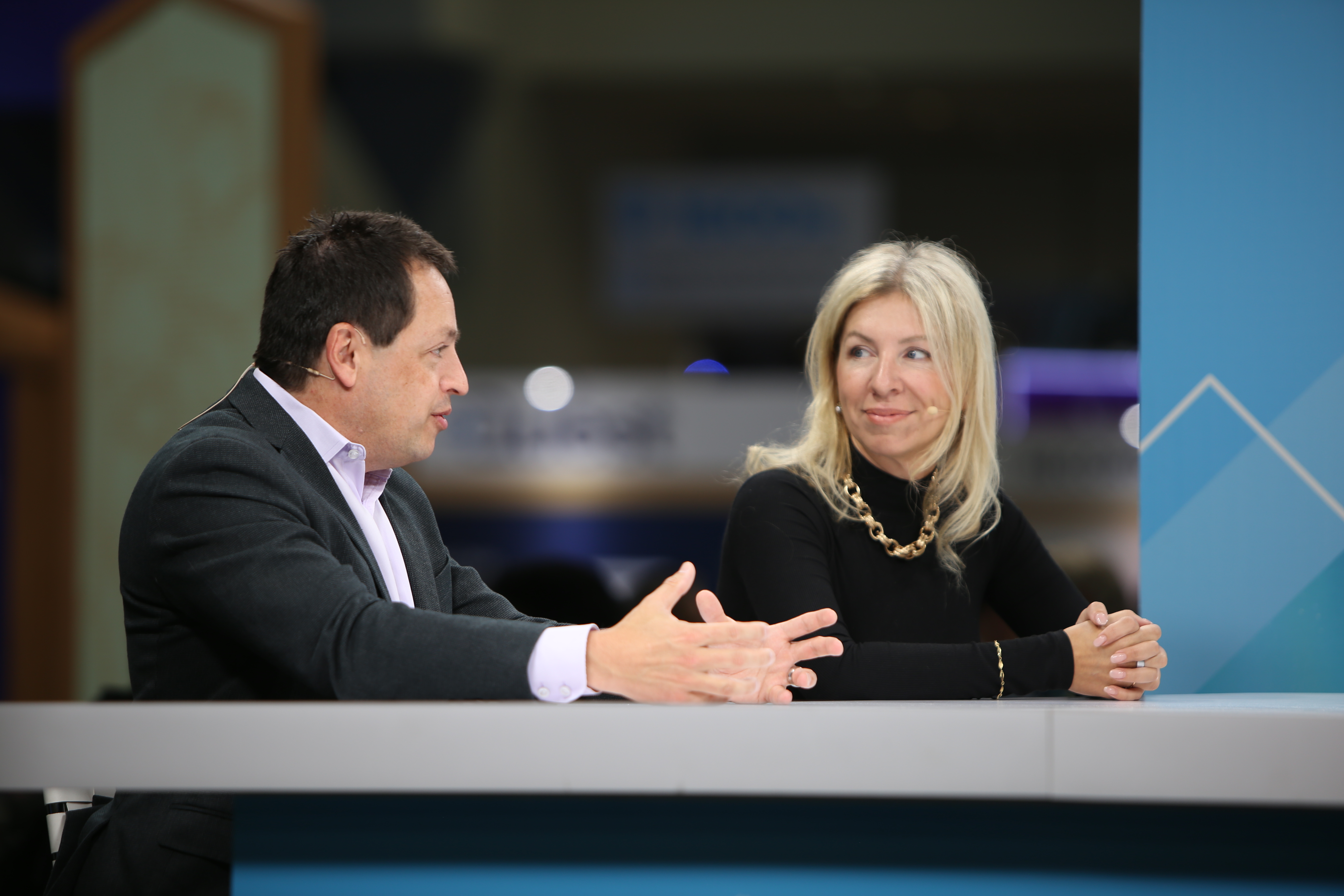
It’s a valuable lesson that resides at the heart of a deepening partnership between Ericsson and Snowflake, according to Elena Fersman (pictured, right), vice president and head of AI innovation and incubation at Telefonaktiebolaget LM Ericsson publ. The company has spent nearly two decades building toward what Fersman describes as an “AI-ification” of its portfolio, a transformation from a 150-year-old radio hardware company into an AI-native enterprise.
“If you have your very good data exposed, then you can apply all your beautiful AI algorithms,” Fersman said. “If you don’t have your data in order in some kind of unified way, you will never be able to adopt your best AI algorithms.”
Fersman and Christian Kleinerman (left), executive vice president of product at Snowflake Inc., spoke with theCUBE’s Dave Vellante and Rebecca Knight at Snowflake Summit 2026, during an exclusive broadcast on theCUBE, SiliconANGLE Media’s livestreaming studio. The discussion centered on how Ericsson is embedding AI into its network, how Snowflake’s CoWork and CoCo products support different user personas and why governance has become an accelerant rather than a constraint in enterprise AI data strategy. (*Disclosure below.)
Snowflake’s overarching goal is to help organizations use AI with the full context of their enterprise data instead of simply enabling raw AI capabilities, according to Kleinerman. The product split between CoCo and CoWork reflects that philosophy. CoCo serves technical users who need deep data management power, while CoWork serves business users who need accurate answers without requiring structured query language expertise.
“The common denominator in all of this is a good and unsiloed data strategy,” Kleinerman added. “If your data was spread in 50 different systems, I don’t know where you start.”
Fersman described Ericsson’s journey using a human-body metaphor, beginning at the surface with managed services data that was easy to observe and automate, then working inward toward the core of the network over time. The company is now deploying what it calls “talk to your network,” a concept built on using Snowflake Cortex AI that allows operators to query network performance, predict degradation and identify root causes through natural language. The longer-term goal is full network autonomy, where the network itself predicts and reacts without human prompting.
“We can have the customer data; we want to be able to sleep without being worried about the data governance and access,” Fersman said. “We manage customer data; that’s even more important for us to be able to sleep well.”
Kleinerman reinforced that point by explaining Snowflake’s philosophy of bringing compute to data instead of vice versa. This principle becomes critical when organizations manage petabytes of telecom data subject to the General Data Protection Regulation and customer-specific contractual requirements. Governance also extends to agent identity, data movement policies and multi-party approvals. These capabilities become increasingly important as agentic systems take on more autonomous action inside regulated environments.
“A lot of these policies, a lot of this governance, is about how do you create bounds so that the unintended behaviors don’t happen?” Kleinerman said. “That’s the purpose.”
Here’s the complete video interview, part of SiliconANGLE’s and theCUBE’s coverage of Snowflake Summit 2026:
(* Disclosure: TheCUBE is a paid media partner for the Snowflake Summit event. Neither Snowflake Inc., the sponsor of theCUBE’s event coverage, nor other sponsors have editorial control over content on theCUBE or SiliconANGLE.)
Support our mission to keep content open and free by engaging with theCUBE community. Join theCUBE’s Alumni Trust Network, where technology leaders connect, share intelligence and create opportunities.
Founded by tech visionaries John Furrier and Dave Vellante, SiliconANGLE Media has built a dynamic ecosystem of industry-leading digital media brands that reach 15+ million elite tech professionals. Our new proprietary theCUBE AI Video Cloud is breaking ground in audience interaction, leveraging theCUBEai.com neural network to help technology companies make data-driven decisions and stay at the forefront of industry conversations.